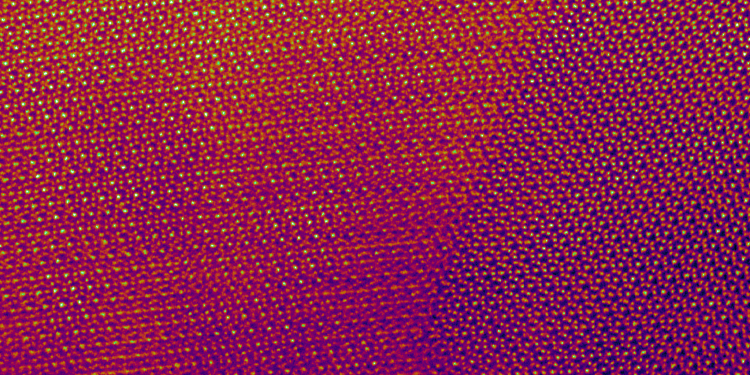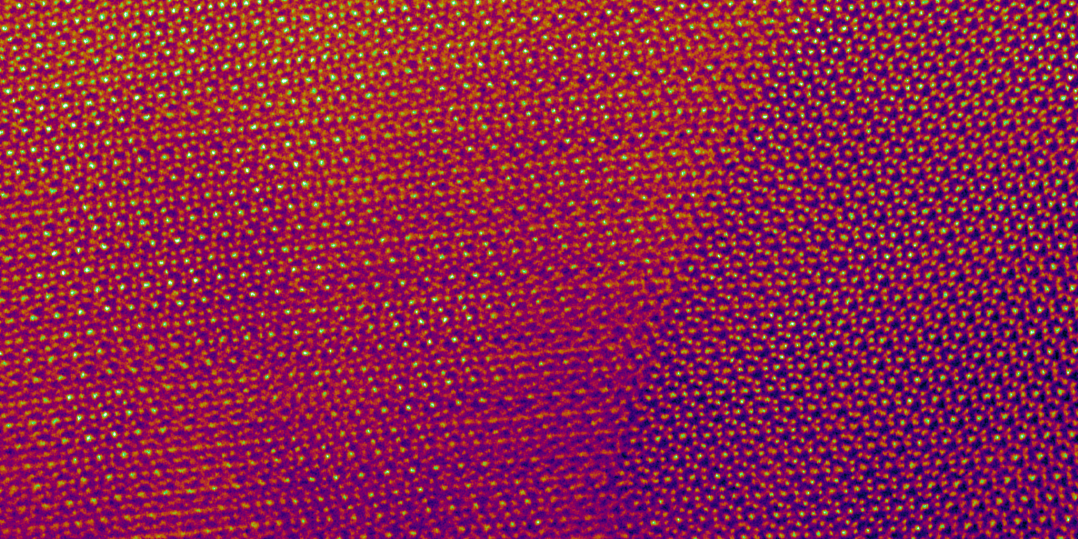
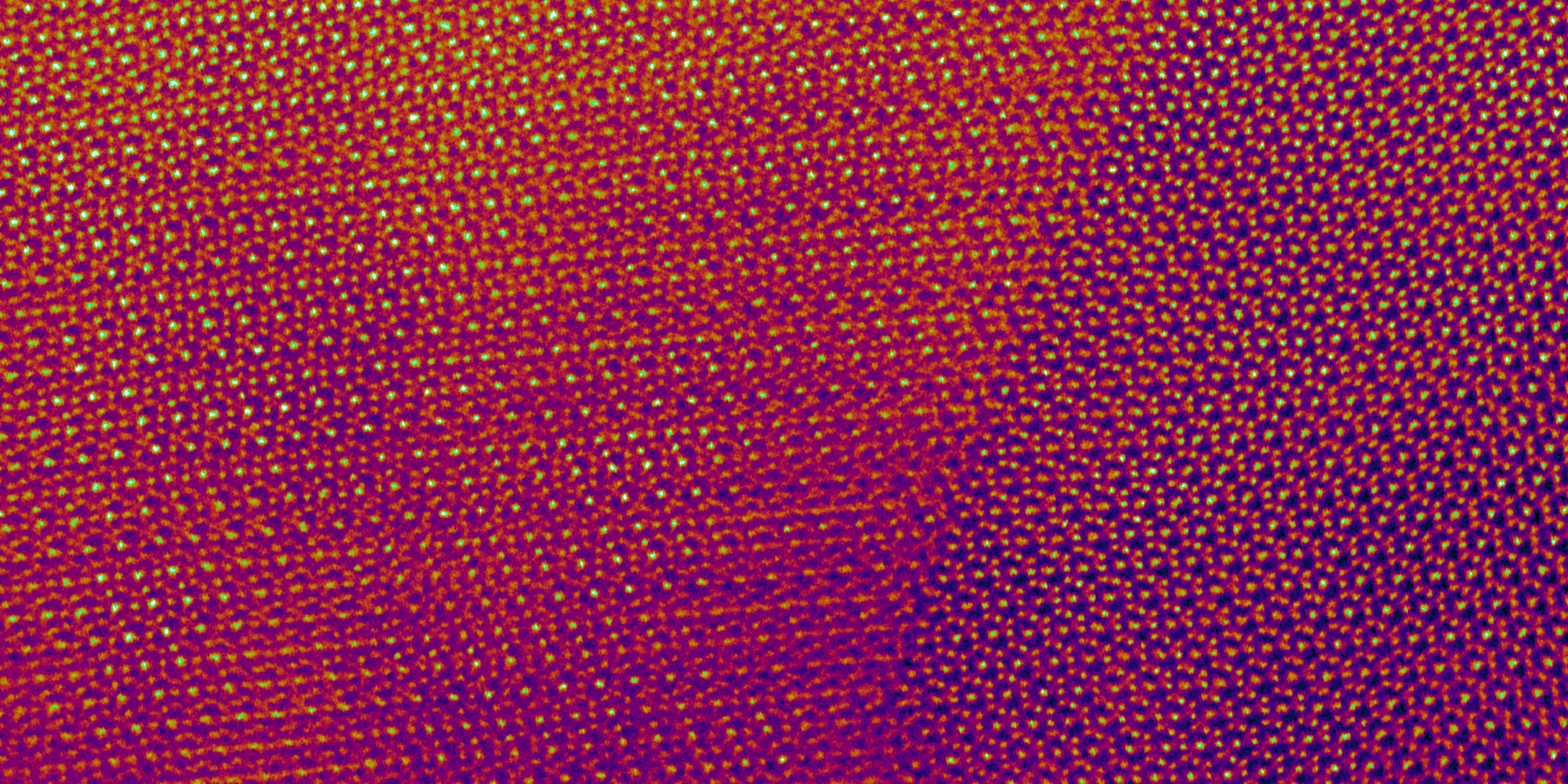
Oxide materials are of high interest for a variety of applications related to renewable energy production. For example, ceramic electrolysis cells are composed of oxides which separate gas species and produce hydrogen. The atomic structure of defects in these materials has the potential to either hinder or boost material performance. Grain boundaries (the interfaces between two differently oriented crystallites in a bulk material) are particularly important defects, as they are ubiquitous in most real materials. They typically form an interconnected network throughout the material, therefore have high potential to influence properties of interest, such as ionic conductivity.
As part of our research, we work to fabricate special grain boundaries so that we can characterize their atomic structure and composition to better understand these defects. Through material doping and processing, we aim to induce compositional and structural changes localized to the grain boundary, and transmission electron microscopy allows us to understand the exact influence of doping on grain boundary atomic structure, which we can connect to the material properties of interest. Furthermore, advanced TEM methods are utilized which can potentially enable characterization of the oxygen sublattice, the chemistry of the interface, and the charge state of the boundary. Materials of interest for current study include strontium titanate (an ionic and/or electronic conducting ceramic) and cobalt oxide (a catalytically active oxide).

Copyright © ATEM 2026
Last update: Feb 17, 2026