
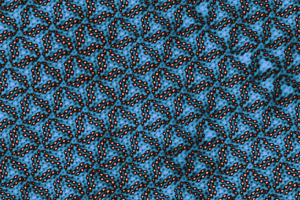
We make scanning transmission electron microscopy imaging quantitative to obtain information on atomic distribution and displacements in complex materials and interfaces.
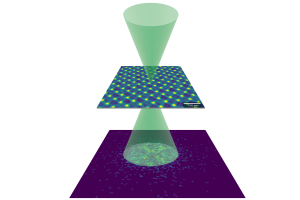
We develop four-dimensional scanning transmission electron microscopy (4D-STEM) techniques to image long range electric and magnetic fields. We move towards 3D atomic imaging of functional oxides and interfaces by utilizing electron ptychography. Ultimately, we aim to combine 4D-STEM with spectroscopic techniques to understand the interrelation of atomic ordering and electronic structure.
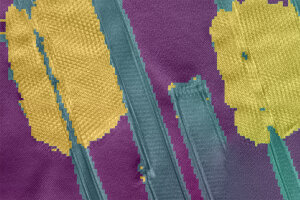
We design new experimental techniques to study the dynamic behavior of material evolution under operating conditions. We enable to probe materials from cryogenic up to high temperatures, while exposing them to strain, electrical bias and environmental conditions.

We develop novel machine learning algorithms and tools to facilitate automated data analysis with the aim to establish autonomous experimentation. Generative models will not only make predictions about novel patterns in functional materials and interfaces, but will render the forecasting of material evolution under in situ conditions possible.

Copyright © ATEM 2026
Last update: Feb 24, 2026